What really happens to teeth while wearing braces or aligners?
When we wear braces or aligners, it may look from the outside as if teeth simply “move.”
In reality, a very precise biological process is taking place behind it, involving the ligament, bone, and cells that constantly remodel the tissue around the tooth root.
A tooth does not move by force on its own. It moves because the body actively adapts the bone around it.
Gentle pressure triggers the body’s response
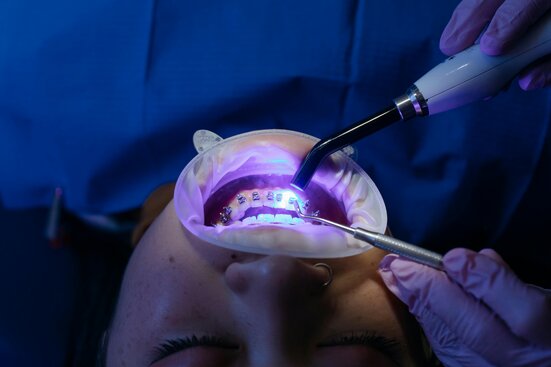
Braces or aligners apply a controlled, gentle, and constant force to the tooth.
That force is transferred to the periodontal ligament, the soft tissue between the tooth root and the bone. On the side where pressure is present, cells begin resorption, meaning the gradual removal of a small amount of bone.
On the opposite side, the body simultaneously creates new bone so the tooth remains stable in its new position. That is exactly why movement is slow: it is not only the tooth that moves, but also the bone that supports it changes.
Why do we feel tightness and mild sensitivity?
The feeling of pressure, tightness, or mild sensitivity after braces are adjusted or after changing to a new aligner is actually a sign that the process is active.
The ligament reacts to the new force, microcirculation in that area changes, and the body begins biological adaptation.
In other words, that feeling is not random, it means the body has initiated tissue remodeling. That is why mild discomfort during the first days is often an expected part of treatment.
Why is consistency so important with aligners?
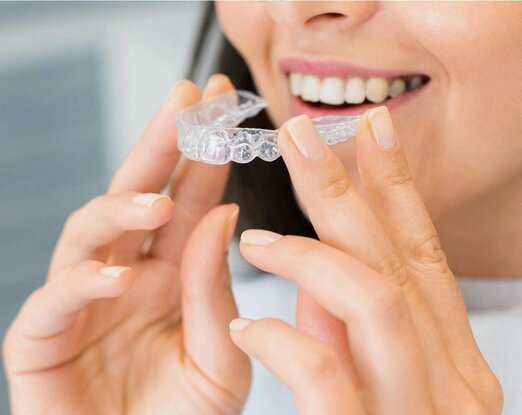
With aligners, the greatest results come from consistency. If aligners are not worn for the recommended number of hours, the force stops being stable and the body does not receive a consistent enough signal to continue adapting.
Then the process slows down, and the next aligner may feel “too tight” because the teeth have not completed the previous phase of movement.
That is why treatment is not only about wearing aligners, but about consistently maintaining the biological process the body is already carrying out.
Tooth movement is actually the work of bone
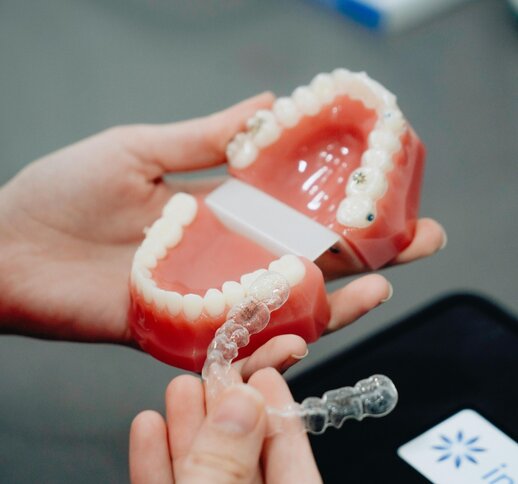
The most interesting part of orthodontic treatment is that it is not only the tooth that moves. The tissue around it changes as well. That is why braces and aligners are much more than an aesthetic treatment, they use the body’s natural ability to adapt.
Teeth do not “wander.” The body moves them step by step through bone remodeling.
Differences in adulthood?
Unlike treatment at a younger age, adult patients often already have existing crowns, bridges, crowding, enamel wear, gum recession, or previous tooth loss, which is why every treatment plan is individual and requires a high level of precision.
That is exactly why continuous education and keeping up with modern protocols are an important part of a quality orthodontic approach.
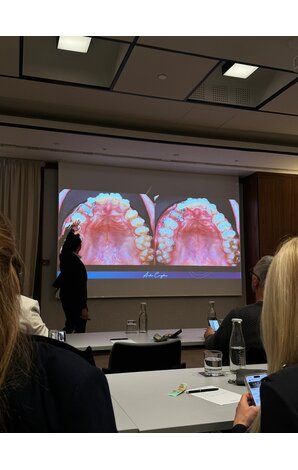
Our Dr. Vesna Vukajlović Vasilić attended the Invisalign Study Club education event titled Complex Cases in Adults, dedicated to complex treatments in adult patients, where modern approaches to planning, predictable tooth movement, and solving demanding clinical situations were discussed.
Knowledge that is constantly improved allows treatment to be not only aesthetically successful, but also functional, stable, and sustainable in the long term.

Sources:
American Association of Orthodontists
https://aaoinfo.org/
Gordon Ranch Dentistry
https://www.gordonranchdentistry.com/articles/do-clear-aligners-work-a-complete-guide