Why does our smile change as we age (and it’s not just about wrinkles)?
Why does our smile change as we age (and it’s not just about wrinkles)?
When we look at old photos, we often notice that our smile has changed. Not only because of wrinkles, but because of the expression itself. The smile looks different — sometimes more tired, less open.
The reason is not just the skin, but the entire structure of the smile.

A smile is not just teeth
A smile is made up of teeth, gums, lips, the jaw, and facial muscles. As we age, all of these components change.
That’s why a smile doesn’t age only on the surface — it changes from within.
What happens to the teeth?
Over time, tooth edges wear down, small shifts occur, color changes, and the gums recede. Even when teeth are healthy, their shape is no longer the same as it was at 20. The edges become flatter, the surface less shiny, and proportions change. This affects how light reflects off the smile and how we perceive it in the mirror.
Lips lose support
The teeth and jaw support the lips.
As the position of the teeth changes, the lips may appear thinner, move inward, and the smile can look “flatter.”
That’s why a smile is more than an aesthetic issue — it is facial architecture. A change in the teeth changes the relationship between the lips and the face.
What happens to the jaw?
With age, bone mass decreases, bite changes occur, and chewing forces are distributed differently. The jaw no longer carries the muscles in the same way as before. This affects facial expression even when we are relaxed.
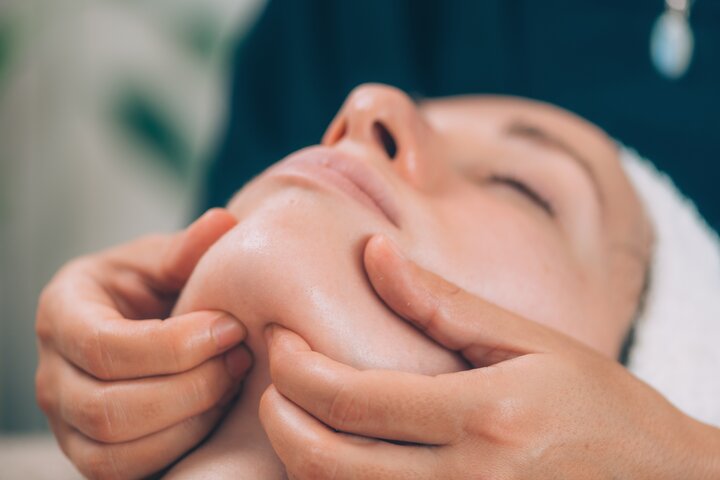
Facial expression and emotions
A smile that looks tired is often not the result of emotions, but of facial mechanics. The muscles work differently, and the structure supporting them changes.
That’s why a smile doesn’t disappear with age — it evolves. Sometimes it is wider, sometimes more subtle, but it always reflects internal structural changes in the face.
Why do we only notice it later?
The changes are slow, gradual, and almost invisible day by day. But when we compare photos taken ten or twenty years apart, the difference becomes clear. This is not a sudden change, but a quiet process that lasts for years.
These changes also affect speech and chewing, the distribution of pressure in the jaw, and self-confidence.
Why it is important to understand this change
A smile is one of the first things people notice about us.
When it changes, the way we see ourselves changes too.
Understanding that a smile is not just skin and wrinkles helps us look at aging differently — to realize that the face has its own “construction,” and that expression changes not only because of years, but because of internal adaptations. This explains why some people look tired even when they feel fine: the structure of the smile has changed.
Source:
https://pmc.ncbi.nlm.nih.gov/articles/PMC4258316/?utm_source